
This article is based on current sleep-science research and guidance from recognized health authorities. It’s written to help you understand the “why” behind your sleep issue—not just hand you a generic checklist.
Sudden Snoring Causes can range from something as harmless as sleeping on your back after a long day to health conditions that deserve medical attention.
If you’ve never snored before but your partner suddenly mentions loud nighttime noises, it’s natural to wonder what’s changed.
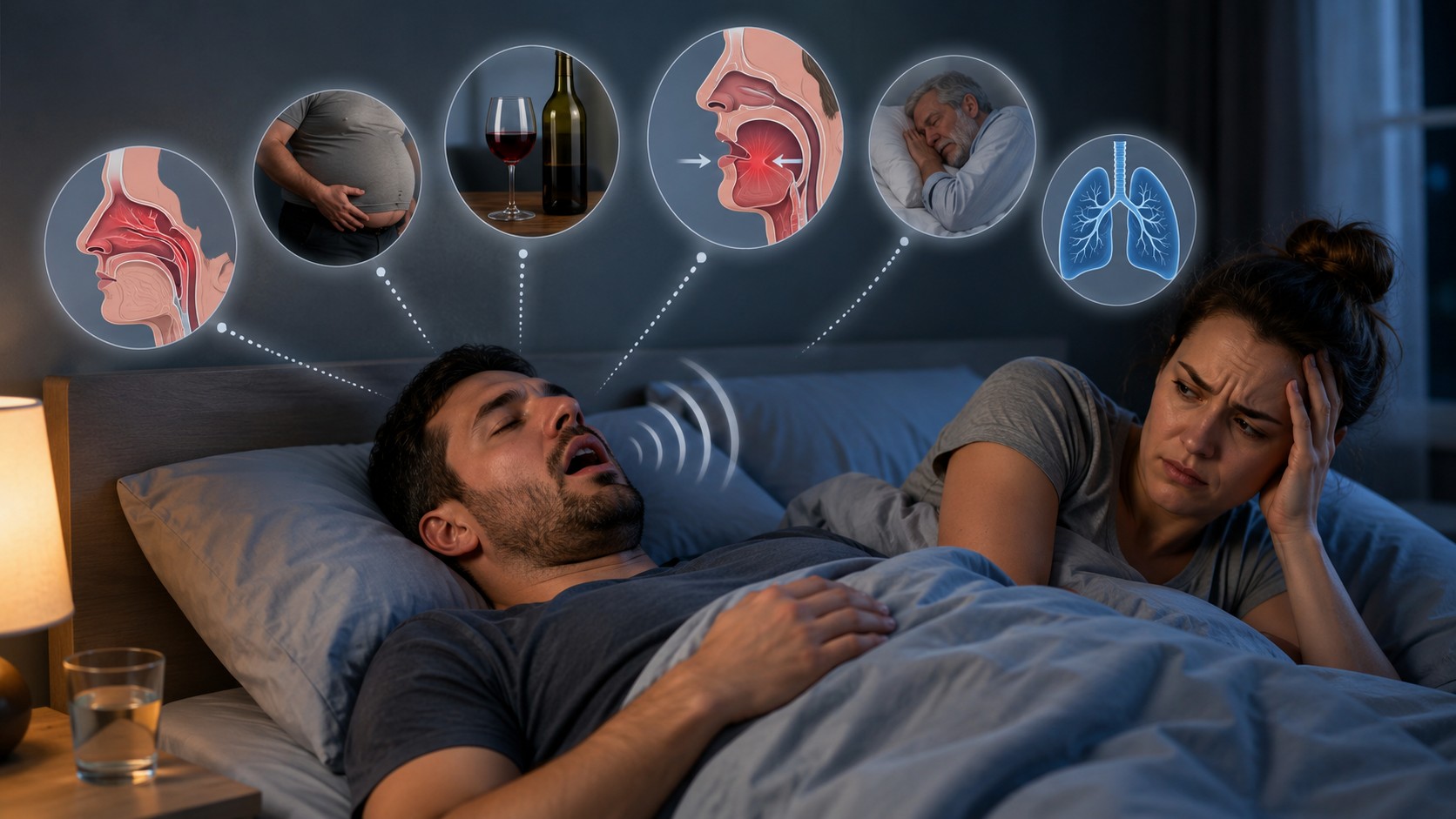
In many cases, sudden snoring happens because something temporarily narrows your airway while you sleep. A cold, seasonal allergies, weight gain, alcohol before bed, or even certain medications can all make snoring appear almost overnight. However, persistent or worsening snoring may sometimes point to an underlying sleep or breathing disorder.
Fortunately, sudden snoring doesn’t always mean something serious is wrong. The key is understanding why it started, recognizing warning signs, and knowing when lifestyle changes are enough versus when it’s time to seek medical advice.
🚀 Quick Summary
Most sudden snoring develops because airflow through your nose or throat becomes partially blocked during sleep. Temporary illnesses, allergies, sleeping position, alcohol, weight changes, and nasal congestion are among the most common causes. If snoring begins suddenly alongside choking, breathing pauses, excessive daytime sleepiness, or high blood pressure, you should speak with a healthcare professional because these symptoms may suggest obstructive sleep apnea.
📋 Table of Contents
- 🔍 What Sudden Snoring Really Means
- 🫁 Common Sudden Snoring Causes
- 🏥 Medical Conditions That Can Trigger Sudden Snoring
- ⚠️ Risk Factors That Increase Your Chances
- 🩺 How Doctors Diagnose Sudden Snoring Causes
- 🌙 Treatment Options That Actually Help
- 🚩 Common Myths About Sudden Snoring
- 🗓️ Putting It All Together
- ❓ Frequently Asked Questions
- ✅ Key Takeaways
- 🌟 Conclusion
🔍 What Does Sudden Snoring Really Mean?
Many people assume that snoring develops slowly over several years. In reality, it can appear almost overnight. That’s because snoring isn’t a disease by itself. Instead, it’s a symptom that your airway has become narrower than usual while you’re asleep.
As you fall asleep, the muscles in your throat naturally relax. Air continues moving through your nose, mouth, and throat. However, if that passage becomes partially blocked, the surrounding tissues vibrate as air squeezes through. Those vibrations create the familiar snoring sound.
The louder the vibration, the louder the snoring tends to be. Although occasional snoring is extremely common, a sudden change deserves attention because something has altered your normal breathing pattern.
Think of it like blowing air through a wide drinking straw versus a narrow one. The narrower the opening, the more turbulence develops. Your airway works in much the same way during sleep.
✅ Fact Check:
Snoring itself isn’t always dangerous. However, sudden snoring combined with repeated breathing pauses, gasping for air, morning headaches, or overwhelming daytime fatigue could indicate obstructive sleep apnea rather than simple snoring.
💤 Why can snoring start so suddenly?
Your airway changes from day to day. Therefore, even a relatively small change can be enough to trigger snoring.
For example, you might:
- Catch a cold that blocks your nose.
- Develop seasonal allergies.
- Gain several pounds over a short period.
- Drink alcohol before bedtime.
- Start a medication that relaxes muscles.
- Sleep flat on your back more often.
Each of these situations can reduce airflow enough to create vibrations that weren’t present before.
🫁 Why airflow matters in Sudden Snoring Causes
Healthy breathing depends on an open airway from your nose to your lungs. Whenever that pathway becomes smaller, your body must work harder to move the same amount of air.
Consequently, the soft tissues inside your throat begin vibrating. While this vibration often sounds harmless, it also serves as a useful clue that something has changed.
According to the Sleep Foundation, snoring commonly occurs because airflow becomes partially restricted during sleep. Likewise, the Cleveland Clinic notes that temporary illnesses, nasal congestion, and lifestyle factors frequently contribute to snoring.
| Airway Change | Possible Result |
|---|---|
| Open airway | Quiet, smooth breathing |
| Partially narrowed airway | Snoring may begin |
| Repeated airway collapse | Possible obstructive sleep apnea requiring evaluation |
It’s also worth remembering that not every episode of sudden snoring signals a lifelong problem. Many people stop snoring once the temporary cause disappears. For instance, your snoring may fade completely after recovering from a cold or once allergy symptoms improve.
On the other hand, if the snoring continues for several weeks or becomes progressively louder, it’s important to investigate the underlying cause rather than simply ignoring it.
🫁 Common Sudden Snoring Causes
If your snoring appeared out of nowhere, there’s usually a reason behind it. Rather than assuming the worst, it’s helpful to look at what has changed recently. In many cases, identifying the trigger makes it much easier to reduce or even eliminate the snoring.
Below are the most common Sudden Snoring Causes that sleep specialists regularly see.
🤧 1. Nasal congestion from a cold or flu
One of the simplest explanations is temporary nasal congestion. When your nose becomes blocked, your body naturally shifts more breathing through the mouth during sleep. As a result, airflow becomes more turbulent, increasing the chance of snoring.
Even a mild cold can narrow the nasal passages enough to produce loud snoring that disappears once you’re healthy again.
Common symptoms include:
- Runny or stuffy nose
- Sore throat
- Facial pressure
- Temporary nighttime mouth breathing
Fortunately, this type of snoring usually improves as the illness resolves.
🌼 2. Seasonal allergies
Allergies can affect your breathing even if you don’t feel particularly sick. Pollen, dust mites, mold, and pet dander cause inflammation inside the nose, reducing the available space for airflow.
Consequently, many people notice that they only snore during certain times of the year.
💡 Practical Tip:
If your snoring seems worse during allergy season, try washing bedding weekly in hot water, keeping bedroom windows closed during high-pollen days, and showering before bed to remove pollen from your hair and skin.
According to the CDC, getting enough quality sleep is important for overall health, and managing conditions that interfere with breathing can help improve sleep quality.
🍷 3. Alcohol before bedtime
Alcohol doesn’t just make you sleepy. It also relaxes the muscles in your throat more than usual.
Because those muscles become looser, your airway narrows more easily. Therefore, even someone who rarely snores may suddenly start snoring after drinking alcohol in the evening.
The risk becomes even higher when alcohol is combined with sleeping on your back.
| Situation | Effect on Snoring |
|---|---|
| No alcohol | Normal muscle tone |
| Alcohol 2–3 hours before bed | Throat muscles relax more, increasing snoring risk |
| Heavy alcohol intake | Greater airway narrowing and louder snoring |
⚖️ 4. Recent weight gain
Even a relatively modest weight gain can influence breathing during sleep. Extra fatty tissue around the neck and throat slightly reduces the space available for airflow.
As a result, people who have gained weight over several months sometimes notice that snoring begins without realizing the connection.
This doesn’t mean every person with extra weight snores. However, maintaining a healthy weight can reduce snoring for many individuals.
🛏️ 5. Sleeping on your back
Your sleeping position matters more than many people realize.
When you sleep on your back, gravity naturally pulls your tongue and soft palate toward the back of your throat. Consequently, the airway becomes narrower than when sleeping on your side.
This explains why some people only snore in one sleeping position.
If your partner notices that the snoring stops after you roll onto your side, your sleep position could be the main culprit.
You may also find our guide on the best sleeping positions for easier nighttime breathing helpful if you’re trying simple, non-medication strategies first.
💊 6. Certain medications
Some medications relax muscles or make you sleep more deeply. Because of that effect, they can increase snoring.
Examples may include:
- Sleeping pills
- Certain anxiety medications
- Some muscle relaxants
- Specific prescription pain medicines
Never stop taking a prescribed medication without discussing it with your healthcare provider. Instead, ask whether your medication could be contributing to your snoring.
🚬 7. Smoking and airway irritation
Smoking irritates the lining of the nose and throat. Over time, chronic irritation causes swelling, inflammation, and increased mucus production.
Therefore, smokers often experience louder snoring than non-smokers.
Even exposure to secondhand smoke may contribute to airway irritation in some people.
😴 8. Poor sleep and extreme fatigue
Ironically, being overly tired can also make snoring worse.
After severe sleep deprivation, your muscles tend to relax more deeply once you finally fall asleep. That additional relaxation increases tissue vibration inside the throat.
This is why someone who normally sleeps quietly may suddenly snore after several nights of poor sleep.
⚠️ When to See a Doctor:
If your sudden snoring is accompanied by choking during sleep, repeated pauses in breathing, morning headaches, daytime exhaustion, chest pain, or someone observes that you stop breathing overnight, arrange a medical evaluation promptly. These symptoms may indicate obstructive sleep apnea or another sleep-related breathing disorder.
Although many of these triggers are temporary, others require proper treatment. The next section explores the medical conditions that can cause sudden snoring and explains why some deserve closer attention than others.
🏥 Medical Conditions That Can Trigger Sudden Snoring
While many Sudden Snoring Causes are temporary, some are linked to medical conditions that should not be ignored. The good news is that early diagnosis often leads to effective treatment. Therefore, understanding these conditions can help you decide whether it’s time to seek professional advice.
Remember that snoring alone doesn’t automatically mean you have a serious illness. However, when it appears suddenly and persists for weeks, it’s worth considering whether an underlying health problem is affecting your breathing during sleep.
😴 Obstructive Sleep Apnea (OSA)
One of the most important conditions associated with sudden snoring is obstructive sleep apnea (OSA). Unlike ordinary snoring, OSA causes the airway to repeatedly collapse during sleep, temporarily stopping breathing.
Each breathing pause usually lasts several seconds. Your brain then briefly wakes you just enough to reopen the airway. Although you may not remember these awakenings, they can happen dozens or even hundreds of times during a single night.
According to the American Academy of Sleep Medicine, untreated sleep apnea can increase the risk of several long-term health problems, including high blood pressure, heart disease, and daytime sleepiness.
Common warning signs include:
- Very loud snoring
- Pauses in breathing noticed by a partner
- Gasping or choking during sleep
- Morning headaches
- Dry mouth after waking
- Difficulty concentrating
- Feeling exhausted despite sleeping all night
If several of these symptoms sound familiar, it’s important to discuss them with a healthcare provider rather than trying to manage the problem on your own.
👃 Chronic nasal blockage
Sometimes the problem begins in the nose instead of the throat.
Conditions such as chronic sinus inflammation, enlarged turbinates, nasal polyps, or a deviated septum can reduce airflow through the nose. Consequently, your body relies more heavily on mouth breathing, making snoring much more likely.
If your nose feels blocked most days of the year instead of only during a cold, a medical evaluation may identify a treatable cause.
🦠 Sinus infections
A sinus infection can temporarily produce some of the loudest snoring people ever experience. Swollen nasal tissues, thick mucus, and inflammation all reduce the available space for airflow.
Fortunately, snoring caused by an acute sinus infection usually improves after the infection resolves.
🧬 Enlarged tonsils or adenoids
Although enlarged tonsils are more common in children, adults can also develop enlarged tonsils that narrow the airway.
Likewise, enlarged adenoids—especially in younger people—may contribute to sudden snoring and noisy breathing at night.
| Medical Condition | How It Causes Snoring | Needs Medical Evaluation? |
|---|---|---|
| Obstructive sleep apnea | Airway repeatedly collapses during sleep | Yes |
| Sinus infection | Inflammation blocks nasal airflow | Sometimes |
| Deviated septum | Chronic nasal obstruction | Often |
| Enlarged tonsils | Reduced airway space | Yes, if persistent |
⚠️ Risk Factors That Increase Your Chances
Even if you’ve never snored before, certain factors make sudden snoring much more likely. Often, several of these occur together rather than individually.
👨 Age
As we get older, the muscles supporting the airway naturally lose some firmness. Therefore, middle-aged and older adults tend to snore more frequently than younger adults.
👨👩👧 Family history
Genetics also play a role. For example, naturally narrow airways, facial structure, and inherited anatomical features can increase the likelihood of snoring.
🩺 Existing health conditions
Certain medical conditions may contribute indirectly by affecting breathing or muscle tone during sleep. Examples include chronic nasal allergies, obesity, and untreated sleep apnea.
If you regularly experience restless sleep, you may also benefit from reading our article on common warning signs of sleep disorders that shouldn’t be ignored.
😵 Lifestyle habits
Finally, everyday habits can make a noticeable difference.
- Smoking
- Regular alcohol consumption before bed
- Poor sleep schedule
- Sleeping flat on your back
- Lack of regular physical activity
Individually, these habits may have only a modest effect. Together, however, they can significantly increase the chance of developing sudden snoring.
Researchers supported by the National Heart, Lung, and Blood Institute (NHLBI) emphasize that healthy sleep habits and identifying underlying sleep disorders are important parts of maintaining overall health.
In the next part, we’ll look at how doctors identify the exact cause of sudden snoring, which tests may be recommended, and the treatments that are most effective for different situations.
🩺 How Doctors Diagnose Sudden Snoring Causes
If your snoring lasts for several weeks, becomes progressively louder, or occurs alongside other concerning symptoms, your healthcare provider may recommend an evaluation. Fortunately, diagnosing most Sudden Snoring Causes is usually straightforward and begins with a detailed discussion of your symptoms and sleep habits.
The goal isn’t simply to stop the noise. Instead, your doctor wants to determine whether your snoring is harmless or whether it’s a sign of a sleep-related breathing disorder that needs treatment.
📝 Your medical history
Your appointment will usually begin with several questions about your overall health and recent lifestyle changes.
Your provider may ask:
- When did the snoring begin?
- Does it happen every night or only occasionally?
- Has anyone noticed pauses in your breathing?
- Do you wake up choking or gasping?
- Do you feel refreshed in the morning?
- Have you recently gained weight?
- Do you drink alcohol before bedtime?
- Have you started any new medications?
These questions often provide valuable clues before any testing is needed.
👄 Physical examination
Next, your healthcare provider may examine your:
- Nose for congestion or structural problems
- Throat for enlarged tonsils
- Tongue and soft palate
- Jaw alignment
- Neck size
- Body weight and body mass index (BMI)
Even small anatomical differences can contribute to narrowed airways during sleep.
📱 Information from your sleep partner
Believe it or not, your partner may provide some of the most useful information.
They might notice:
- Very loud snoring
- Breathing pauses
- Gasping for air
- Restless movements
- Frequent awakenings
- Changes in your sleeping position
Since people rarely remember these events themselves, observations from someone who sleeps nearby can help your doctor identify possible sleep apnea.
💡 Practical Tip:
If possible, ask your partner to record a short video of your snoring. A recording can sometimes help your healthcare provider understand what happens during sleep before ordering additional tests.
🌙 Sleep studies
If obstructive sleep apnea is suspected, your provider may recommend a sleep study.
According to the American Academy of Sleep Medicine, sleep studies help evaluate breathing, oxygen levels, heart rate, and sleep stages throughout the night.
Depending on your situation, testing may involve:
| Test | Purpose | Where It’s Done |
|---|---|---|
| Home Sleep Apnea Test | Screens for obstructive sleep apnea | At home |
| Polysomnography | Comprehensive sleep evaluation | Sleep laboratory |
Not everyone who snores needs a sleep study. However, persistent symptoms, excessive daytime sleepiness, or breathing pauses often justify further testing.
🌙 Treatment Options That Actually Help
The best treatment depends entirely on the underlying cause. That’s why identifying the reason behind your Sudden Snoring Causes is far more effective than simply buying the first anti-snoring product you see online.
🏡 Lifestyle changes
Many people experience significant improvement by making a few practical adjustments.
- Sleep on your side instead of your back.
- Maintain a healthy weight if advised by your doctor.
- Avoid alcohol for several hours before bedtime.
- Follow a consistent sleep schedule.
- Stop smoking if you currently smoke.
Although these changes aren’t instant cures, they often reduce snoring over time.
👃 Treat nasal congestion
If allergies or a cold are causing your snoring, improving nasal airflow may help considerably.
Your healthcare provider may recommend appropriate allergy treatment, saline nasal sprays, or other therapies depending on the cause.
The Cleveland Clinic notes that improving nasal breathing can reduce snoring in people whose symptoms are primarily caused by nasal obstruction.
😴 CPAP therapy for sleep apnea
If you’re diagnosed with obstructive sleep apnea, your doctor may recommend Continuous Positive Airway Pressure (CPAP).
A CPAP machine delivers gentle air pressure through a mask to help keep the airway open throughout the night.
While it can take time to adjust, CPAP remains one of the most effective treatments for moderate to severe obstructive sleep apnea.
🦷 Oral appliances
For some people with mild to moderate sleep apnea or simple snoring, a custom-fitted oral appliance from a qualified dentist may help.
These devices gently reposition the lower jaw to improve airflow during sleep.
If you’re exploring ways to improve your sleep quality overall, you may also enjoy our guide on healthy bedtime habits that support deeper, more restful sleep.
⚠️ When to See a Doctor:
Seek medical attention promptly if your snoring is accompanied by repeated breathing pauses, chest pain, severe daytime sleepiness, morning headaches, or sudden worsening after a stroke or another serious medical condition.
🚩 Common Myths About Sudden Snoring
There are plenty of misconceptions about snoring. Unfortunately, believing these myths can delay proper treatment or cause people to ignore important warning signs. Let’s separate fact from fiction.
❌ Myth: Sudden snoring is always harmless
Reality: Many cases are harmless and temporary. However, persistent sudden snoring—especially when combined with breathing pauses, choking, or excessive daytime sleepiness—may indicate obstructive sleep apnea or another medical condition.
❌ Myth: Only higher weight people snore
Reality: Although excess weight increases the risk, people of all body types can snore. Nasal congestion, allergies, facial anatomy, enlarged tonsils, alcohol use, and sleeping position can all contribute.
❌ Myth: Snoring means you’re sleeping deeply
Reality: Loud snoring may actually signal disrupted sleep. People with sleep apnea often wake repeatedly without realizing it, preventing restorative sleep.
❌ Myth: Nothing can be done about snoring
Reality: Many Sudden Snoring Causes respond well to treatment. Depending on the cause, improving sleep position, treating allergies, managing weight, or using medical therapies can significantly reduce or eliminate snoring.
✅ Fact Check:
Not every anti-snoring product works for everyone. The most effective solution depends on why you’re snoring. Identifying the underlying cause is much more important than trying random products.
🗓️ Putting It All Together
If you’ve recently started snoring, there’s no need to panic. Instead, take a step-by-step approach.
- Think about any recent changes, such as illness, allergies, medications, weight gain, or alcohol use.
- Ask someone whether your snoring includes pauses in breathing or gasping.
- Try simple lifestyle changes like sleeping on your side and avoiding alcohol before bed.
- Treat temporary nasal congestion if appropriate.
- Monitor whether the snoring improves over the next few weeks.
- Schedule a medical evaluation if symptoms persist or warning signs develop.
Remember, treating the underlying cause—not just the sound—is the best long-term solution.
❓ Frequently Asked Questions
Can Sudden Snoring Causes disappear on their own?
Yes. If the snoring is caused by a cold, temporary allergies, or short-term nasal congestion, it often improves once the underlying issue resolves.
Why did I suddenly start snoring even though I’ve never snored before?
Common reasons include nasal congestion, allergies, alcohol before bed, recent weight gain, medications, or sleeping on your back. In some cases, obstructive sleep apnea may also be responsible.
Should I worry if my partner says I stop breathing while snoring?
Yes. Pauses in breathing, choking, or gasping during sleep should always be discussed with a healthcare provider because they may indicate obstructive sleep apnea.
Can stress cause sudden snoring?
Stress itself isn’t a direct cause. However, stress can lead to poor sleep, alcohol use, weight changes, or medications that indirectly increase the risk of snoring.
Can allergies cause sudden snoring?
Absolutely. Allergies often cause nasal swelling and congestion, reducing airflow and making snoring more likely.
Is sudden snoring a sign of sleep apnea?
Sometimes, but not always. While obstructive sleep apnea commonly causes loud snoring, many people snore without having sleep apnea. A medical evaluation helps determine the difference.
Will sleeping on my side help?
For many people, yes. Side sleeping helps keep the airway more open than sleeping flat on the back.
When should I see a doctor about sudden snoring?
You should seek medical advice if your snoring lasts several weeks, becomes progressively louder, includes breathing pauses, or causes excessive daytime sleepiness, morning headaches, or poor concentration.
✅ Key Takeaways
- 😴 Sudden snoring usually develops because the airway becomes temporarily narrower.
- 🤧 Colds and allergies are among the most common temporary triggers.
- 🍷 Alcohol before bed relaxes throat muscles and may worsen snoring.
- 🛏️ Sleeping on your back increases airway narrowing in many people.
- ⚖️ Even modest weight gain can contribute to snoring.
- 💊 Some medications may increase the likelihood of snoring.
- 🚬 Smoking can irritate the airway and make snoring worse.
- 🫁 Persistent loud snoring with breathing pauses may indicate obstructive sleep apnea.
- 🩺 A healthcare provider can determine whether further testing is necessary.
- 🌙 Treating the underlying cause is more effective than masking the symptom.
- 📋 Lifestyle changes often improve mild snoring.
- ✅ Early evaluation helps prevent complications if a sleep disorder is present.
🌟 Conclusion
Sudden Snoring Causes can range from simple, temporary issues like allergies or a cold to more serious conditions such as obstructive sleep apnea. Fortunately, most cases become easier to manage once you identify what’s causing the change.
Pay attention to accompanying symptoms rather than the snoring alone. If your snoring is occasional and linked to a temporary trigger, simple lifestyle adjustments may be enough. However, if it persists, becomes progressively louder, or includes choking, breathing pauses, or excessive daytime sleepiness, don’t ignore those warning signs.
Ultimately, the best next step is to understand the cause instead of simply trying to silence the sound. A timely evaluation and the right treatment can improve not only your sleep but also your long-term health and quality of life.
Trusted Resources:

0 Comments